A previous article described the collection of Indian miniatures and related items gifted to the National Library of Australia in Canberra by Thomas Gayer-Anderson. Sweden’s Museum of Mediterranean Studies also holds important items from the brothers’ collections. Robert sold part of his ancient Egyptian collection to the Medelshavmuseet, including many beautiful pots and bowls from the Predynastic period of Egypt’s history.
The Egypt of the Predynastic period, 5000-3050/3000 BC, was not the single unified country it became under the Pharaohs but a series of towns and cities with individual rulers. Archaeological excavations show distinct differences between the Predynastic cultures of northern and southern Egypt, reflecting their different environments and contacts through trade and immigration with neighbouring peoples in the Near East and Africa.
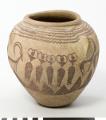
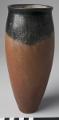
The collection is particularly strong in ceramics from Upper Egypt, the southern part of the Nile from Beni Hasan to Aswan. The oldest from the Naqada I cultural period, 4000-3500 BC and Naqada II, 3500-3200 BC. Naqada is the village where the archaeology first revealed the evolution in phasing of the distinctive pottery styles of the period 4000-3000 BC. The Naqada III period, 3200-3000 is not represented in Robert Gayer-Anderson’s collection in Sweden. There are also several palettes from this period, which were probably intended to hold cosmetics and two mace heads for use as weapons.
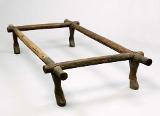
The collection also includes a bed that Robert bought from a second-hand shop for a pound. It came complete with a modern mattress that the seller thought was worth more than the bed! Gaston Maspero the then director of antiquities to the Egyptian government thought it dated from around 4000 BC and was probably a funerary bed, although on the Museum website it is undated.
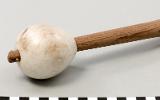
As Robert purchased these objects from dealers their original location in the burial sites from which they were taken is lost. Fortunately, because of the discovery of intact burials such as those at Naqada, it is possible to assign approximate dates and to locate the objects within their original cultural setting.
The Stockholm collection taken together with those presented to the Fitzwilliam, the British Museum and the Manchester Museum stand as testament to the breadth and the depth of Robert Gayer Anderson’s ancient Egyptian collection, ranging in date from around 4500 BC to the period of Roman occupation.
Bibliography
- Ancient Egypt, An Introduction: Selima Ikram; Cambridge University Press 2009
- Gayer Anderson The Life and Afterlife of the Irish Pasha: Louise Foxcroft; American University in Cairo Press 2016